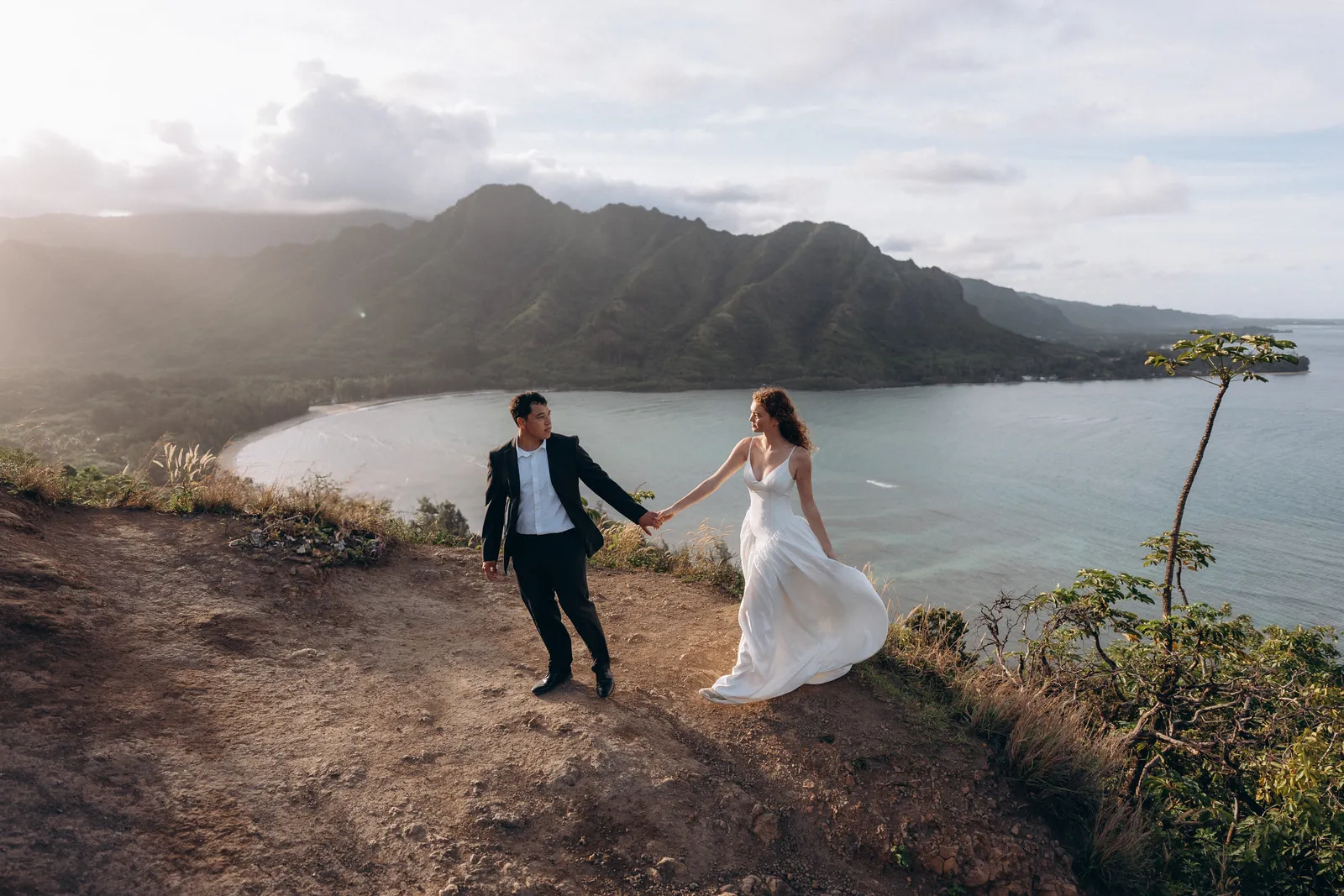
Hawaii Wedding Photography Permits: What Couples Need to Know
Paid wedding photography or videography on public land in Hawaiʻi often requires a permit. Learn how O+A, Wiki, State Park and county permits differ.
Do you need a permit for wedding photos in Hawaiʻi?
Often, yes—when a paid photographer or videographer works on public land. But there is no single statewide "wedding photo permit." The required authorization depends on who manages the exact location and whether you are only taking photos or also holding a ceremony there.
• Photography or video only at an eligible DLNR Open & Accessible site: an O+A ePermit may apply.
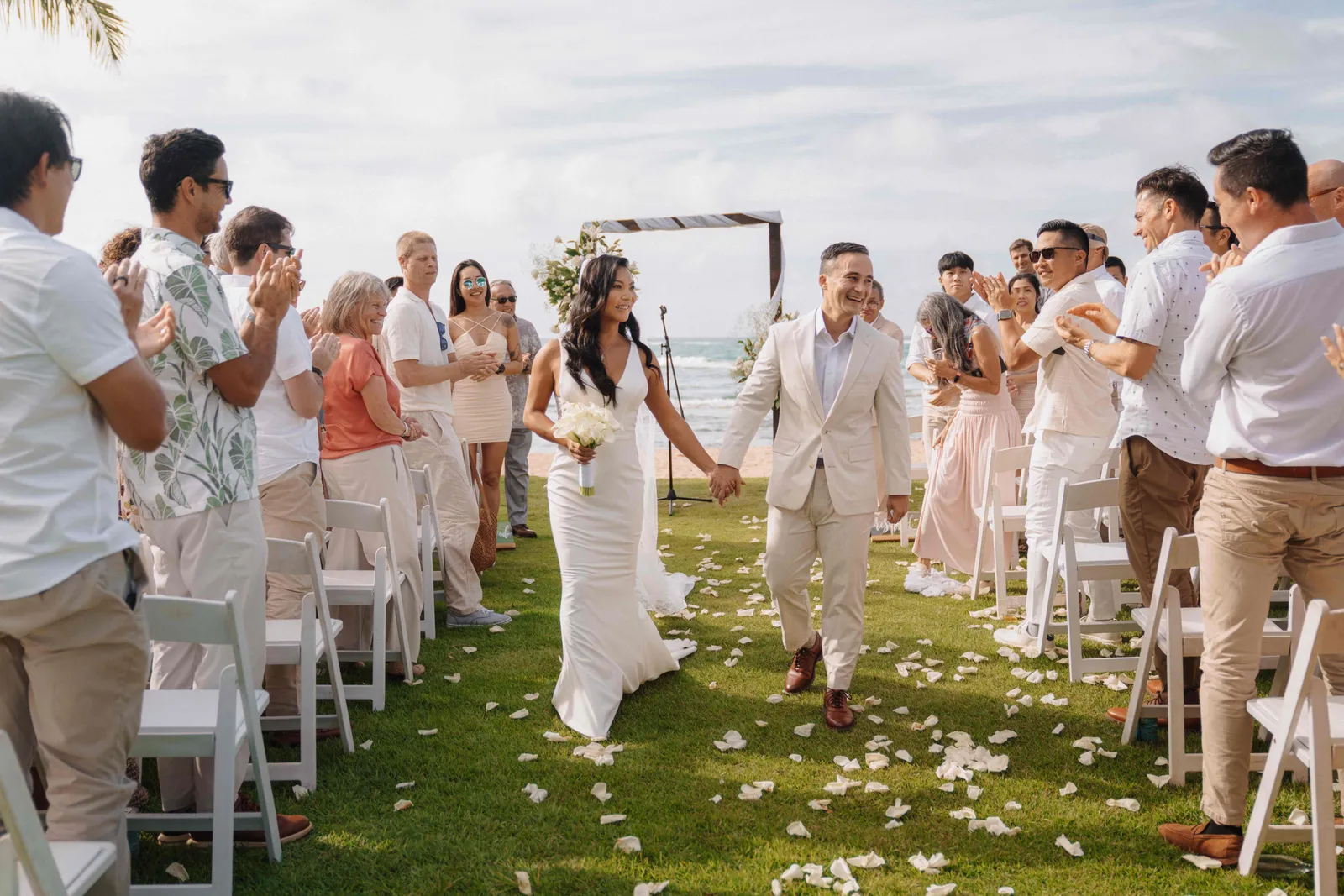
• A ceremony on an unencumbered State shoreline: a Wiki Permit is generally required.
• A wedding or elopement in a State Park: a State Park Special Use Permit is required; submit the request at least 45 days before the date.
• A county park or privately owned location: follow the county's or owner's rules. Separate State authorization may still apply if you move onto the sandy shoreline.
Confirm the exact location, activity, total number of people including vendors, props or décor, and land jurisdiction before treating the location as booked.
Who should obtain the permit?
Do not assume that the couple, venue or photographer is already handling it. Confirm in writing which permit or permits apply, who will be the named applicant, whether liability insurance is required, who will carry the permit on the day, and whether the permit cost is included in your package.
DLNR's current Wiki Permit materials require a Certificate of Liability Insurance. They also make the applicant responsible for compliance and require participating professionals to carry a copy of the permit.
How the permit paths differ
A few permit paths come up most often for weddings and elopements, and the right one depends on the exact location and activity:
• O+A ePermit: for qualifying photo or video shoots at Open & Accessible sites approved by the Hawaiʻi Film Office.
• Wiki Permit: for commercial activity, including beach weddings, on certain unencumbered State shorelines and public beaches.
• State Park Special Use Permit: for weddings and elopements held in a State Park.
• County permit: for certain county parks and city-managed spaces.
An O+A permit can cover a photo or video shoot, but it does not cover the ceremony itself. If you are marrying on State land, the ceremony side is usually covered by a Wiki Permit or a State Park Special Use Permit, depending on the location.
Wiki Permit fees and limits
The current DLNR terms linked from its commercial-activities page list a fee of $0.10 per square foot per event per day, with a $20 minimum. The standard application also lists a two-hour maximum and a maximum of 30 people, including professionals.
Larger setups usually move out of the simpler category. Additional décor, an arch, higher guest counts or other ceremony elements can push an event into a different permitting path, so a simple beach ceremony is generally easier to permit than an elaborate one.
State Parks are a separate category
If the wedding or elopement takes place in a State Park, the Hawaiʻi Film Office says a Special Use Permit is required, and the State Parks guidance says these requests should be submitted at least 45 days in advance.
Not every scenic State Park is available through the simpler Open & Accessible process. On the current O+A site list, all State Park locations were removed on Oʻahu and Maui, Kauaʻi has a separate list of removed parks, and Hawaiʻi Island still lists some State Parks. Confirm the current status for your exact location.
County parks and the sandy shoreline
Some city- and county-managed parks and beaches have their own permit process. On Oʻahu, paid commercial photography or video at eligible City and County of Honolulu parks and beaches is handled through the Honolulu Film Office permit process. Its current Open & Accessible conditions explain that the city permit may work in tandem with the State O+A permit where city and State jurisdictions meet.
One detail matters: a park may be county-managed while the sandy shoreline is still under State jurisdiction. In that case, you may need separate State authorization for the beach area even when the park itself is county-managed.
Private venues are usually simpler
If the ceremony and photos happen entirely on private property, the State permit question is often much simpler, because the venue's own permissions generally control use of that property. If photos later move onto a public beach or public land, permits may still apply to that portion.
What we need before treating a location as final
We do not promise that Hawaii Wedding Visuals obtains every permit automatically. To give you accurate guidance, send us a pin of the exact location, whether you are only taking photos or also holding the ceremony there, your guest and vendor headcount, and any décor such as an arch or chairs.
Rules and fees change, and jurisdiction can differ between two locations that look almost identical. Confirming these details early keeps your date from being built on an assumption.
Rules and fees can change. Confirm current requirements with the linked agency.
Sources
- Hawaiʻi Film Office — Elopement & Wedding Photography
- Hawaiʻi Film Office — State Film Permits
- Hawaiʻi Film Office — ePermit System
- Hawaiʻi Film Office — Open & Accessible Sites
- DLNR Land Division — Commercial Activities
- DLNR — Wiki Permit Application and General Terms and Conditions (PDF)
- Hawaiʻi State Parks — Do We Need a Permit to Get Married in a State Park?
- Honolulu Film Office — Open & Accessible Permit Application (PDF)
- Honolulu Film Office — Parks & Recreation Pre-Application Conditions (PDF)
Ready to Plan Your Hawaii Wedding?
Let's talk about bringing your vision to life. We'd love to hear about your plans.
Check Availability